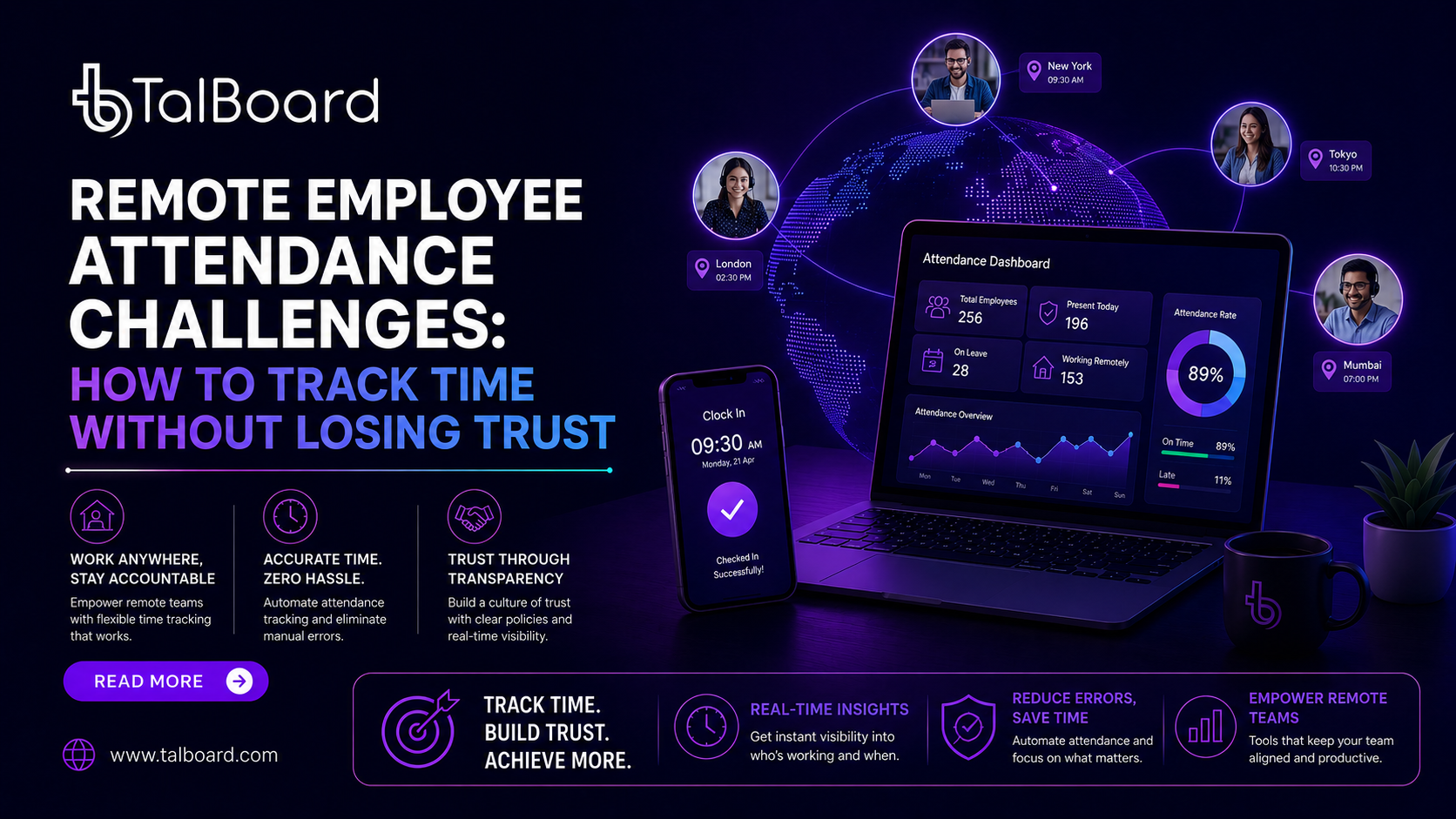
Remote work has become a permanent part of modern business. While it offers flexibility and access to global talent, it also creates new challenges for HR teams—especially when it comes to tracking employee attendance.
Unlike office environments where employees are physically present, remote teams require accurate, transparent, and automated attendance systems. Without them, businesses often struggle with inaccurate work hours, payroll discrepancies, compliance issues, and reduced productivity.
The key isn’t monitoring employees more—it’s creating a reliable attendance process that builds accountability and trust.
Why Remote Attendance Tracking Is Difficult
Managing attendance for distributed teams isn’t as simple as recording clock-in and clock-out times.
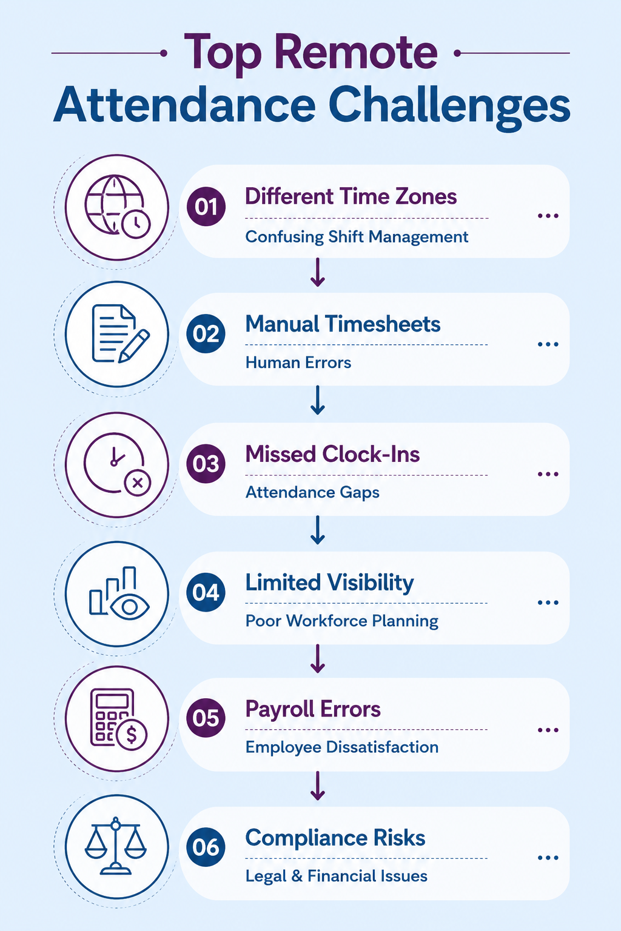
Common challenges include:
- Employees working from different locations and time zones
- Manual attendance entries leading to errors
- Missed or forgotten clock-ins
- Difficulty tracking overtime accurately
- Lack of visibility into working hours
- Payroll delays due to inaccurate attendance records
- Compliance risks with labor regulations
Without a centralized attendance system, HR teams spend hours correcting timesheets instead of focusing on employee engagement.
The Hidden Cost of Poor Attendance Tracking
Even small attendance mistakes can create significant operational problems.
Payroll Errors
Incorrect working hours directly affect salaries, overtime calculations, incentives, and reimbursements.
Reduced Productivity
Managers lack visibility into team availability, making collaboration and planning more difficult.
Employee Frustration
Frequent payroll corrections reduce employee confidence in HR processes.
Compliance Risks
Many industries require accurate employee time records for audits and labor law compliance.
Administrative Burden
HR professionals spend valuable time fixing attendance issues instead of improving employee experience.
Best Practices for Managing Remote Attendance
1. Use Digital Attendance Systems
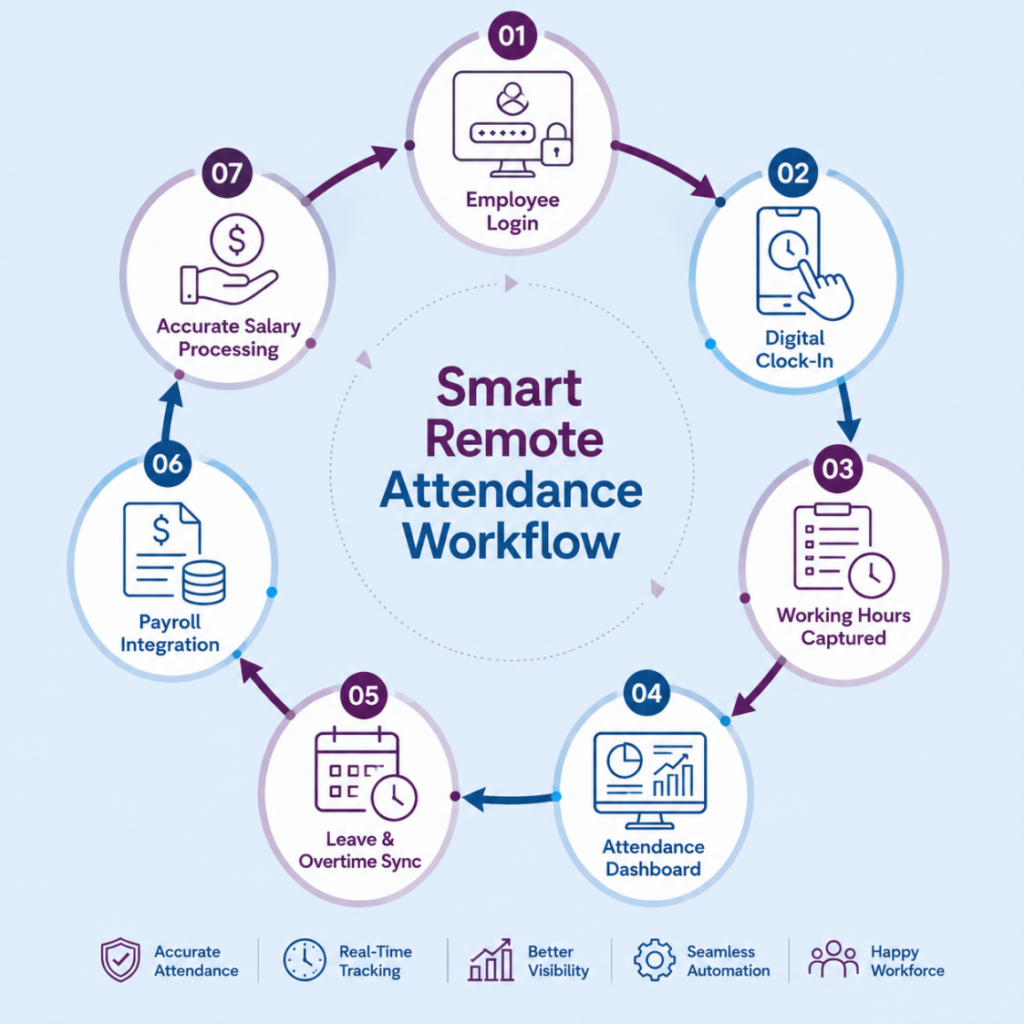
Automated attendance software eliminates manual errors while providing real-time visibility into employee working hours.
2. Clearly Define Work Policies
Employees should know:
- Working hours
- Break policies
- Overtime approval process
- Leave procedures
- Attendance expectations
Clear policies reduce misunderstandings.
3. Enable Mobile Attendance
Remote employees should be able to clock in securely using their smartphones or laptops from approved locations.
4. Automate Leave Management
Attendance and leave records should stay synchronized to eliminate duplicate entries and payroll mistakes.
5. Monitor Attendance Trends
Instead of focusing on individual activity, HR should identify patterns like:
- Frequent absenteeism
- Late logins
- Overtime spikes
- Shift coverage issues
These insights support better workforce planning.
Features Every Remote Attendance Solution Should Include
A modern attendance platform should offer:
- Cloud-based attendance tracking
- Mobile clock-in/clock-out
- Shift scheduling
- Leave management integration
- Real-time attendance dashboard
- Automated overtime calculation
- Payroll integration
- Attendance reports and analytics
- Multi-location workforce support
- Secure employee records
These features help HR teams save time while improving accuracy.
How Talboard Simplifies Remote Attendance
Talboard helps organizations manage remote and hybrid workforces with a centralized attendance management system.
With Talboard, HR teams can:
- Track attendance from anywhere
- Manage multiple shifts and locations
- Automate attendance records
- Integrate attendance with payroll
- Reduce manual HR workload
- Monitor attendance through real-time dashboards
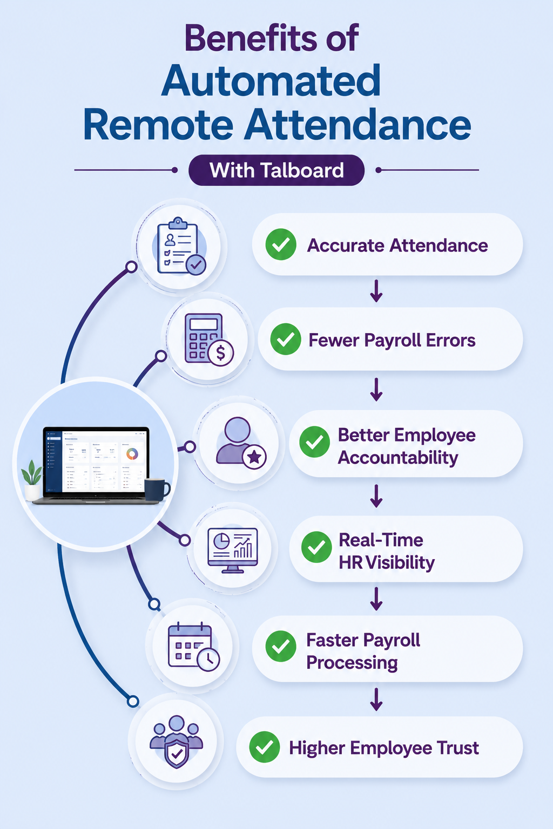
- Improve payroll accuracy
- Ensure compliance with attendance policies
The result is a faster, more reliable attendance process that supports both HR teams and employees.
Final Thoughts
Remote work doesn’t have to make attendance management more complicated. The right technology replaces manual processes with automation, giving HR teams accurate data while giving employees a transparent and hassle-free experience.
As organizations continue to embrace hybrid and remote work, investing in an intelligent attendance management system is no longer optional—it’s essential for maintaining productivity, payroll accuracy, compliance, and employee trust.
With Talboard, businesses can confidently manage remote attendance, reduce administrative effort, and create a more efficient workforce for the future.