Introduction
Employee performance is one of the biggest drivers of business success. Yet many organizations still rely on outdated annual reviews, scattered spreadsheets, or subjective feedback to evaluate employees. This often results in inconsistent performance assessments, reduced employee engagement, and missed opportunities for growth.
Modern businesses need a structured, data-driven approach to performance tracking that helps managers measure productivity, identify skill gaps, recognize achievements, and support continuous improvement.
With an integrated HR platform like Talboard, organizations can automate performance tracking, monitor employee progress in real time, and make informed decisions that improve both employee satisfaction and business outcomes.
Why Employee Performance Tracking Matters
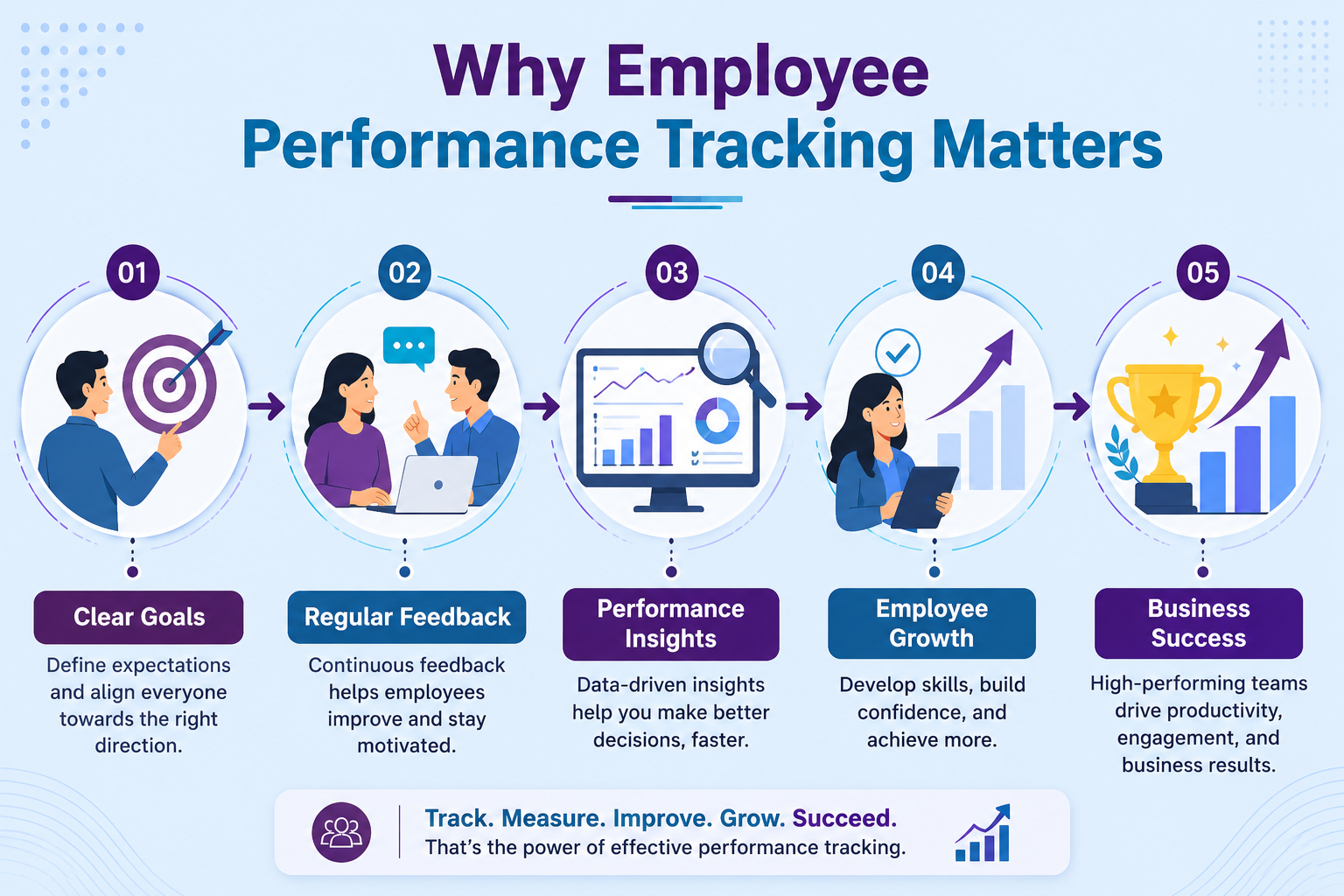
Performance tracking isn’t about monitoring employees every minute—it’s about helping them succeed.
A structured performance management system enables organizations to:
- Set clear expectations
- Track employee progress
- Identify high performers
- Detect performance issues early
- Improve employee engagement
- Support promotions and career growth
- Make objective appraisal decisions
Companies with continuous performance management experience higher employee engagement, better productivity, and lower turnover compared to organizations relying only on annual reviews.
What is Employee Performance Tracking?
Employee performance tracking is the process of measuring an employee’s work against predefined goals, responsibilities, and key performance indicators (KPIs).
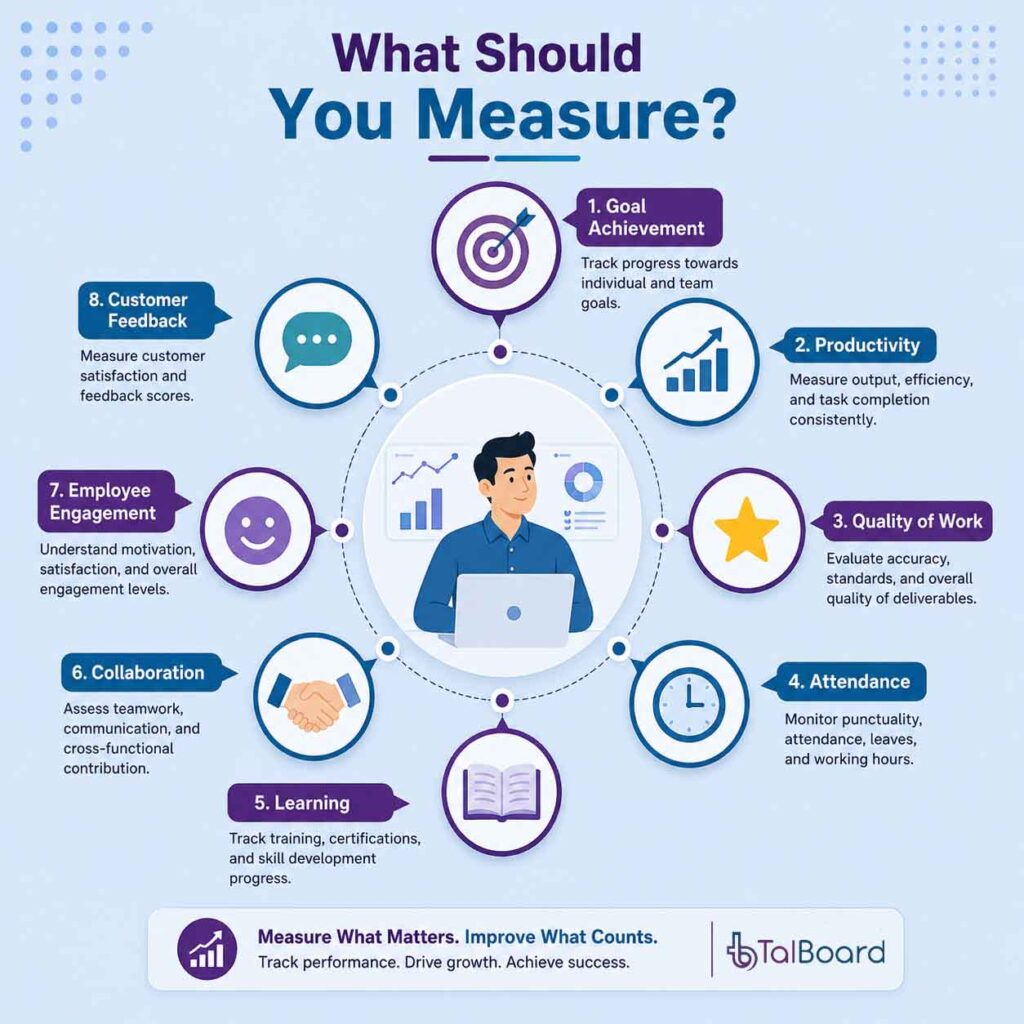
Instead of relying on opinions, organizations use measurable data such as:
- Goal completion
- Attendance
- Productivity
- Project delivery
- Quality of work
- Customer feedback
- Learning progress
- Collaboration
Modern HR software collects this information automatically and provides managers with actionable insights.
Key Metrics Every Organization Should Track
1. Goal Achievement
Track whether employees are meeting quarterly or monthly objectives.
Examples include:
- Sales targets achieved
- Projects completed
- Tasks closed
- Revenue generated
- Customer satisfaction scores
2. Productivity
Understand how efficiently employees complete assigned work.
Metrics may include:
- Tasks completed
- Project turnaround time
- Billable hours
- Utilization rate
- Output per employee
3. Attendance & Punctuality
Consistent attendance often impacts team productivity.
Monitor:
- Working hours
- Late logins
- Absenteeism
- Leave utilization
- Overtime
Integrated attendance systems provide accurate performance data without manual effort.
4. Quality of Work
Quantity alone doesn’t define performance.
Measure:
- Error rates
- Customer complaints
- Rework percentage
- Compliance scores
- Audit results
5. Employee Development
Track professional growth through:
- Training completion
- Certifications
- Skill assessments
- Learning hours
- Internal promotions
Employees who continuously learn tend to perform better over time.
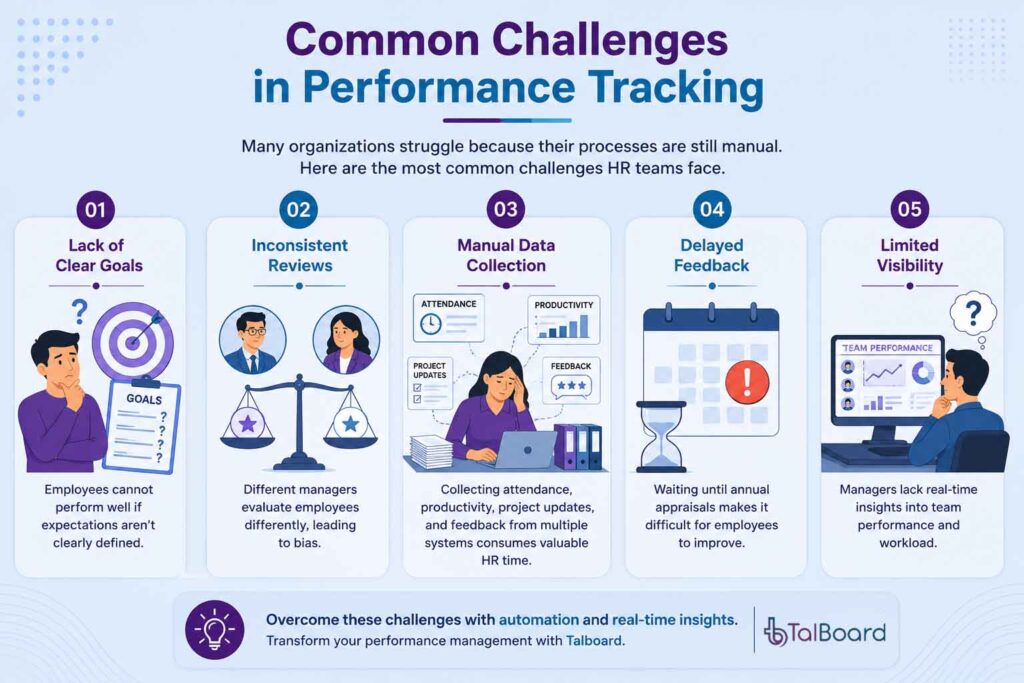
Common Challenges in Performance Tracking
Many organizations struggle because their processes are still manual.
Some common challenges include:
Best Practices for Effective Performance Tracking
Set SMART Goals
Goals should be:
- Specific
- Measurable
- Achievable
- Relevant
- Time-bound
Instead of:
“Improve sales”
Use:
“Increase monthly sales by 15% in the next quarter.”
Provide Continuous Feedback
Regular one-on-one meetings help employees improve faster than annual reviews alone.
Monthly feedback sessions create stronger communication between employees and managers.
Use Data Instead of Opinions
Performance decisions should be based on measurable KPIs rather than personal opinions.
Examples include:
- Project completion rates
- Attendance records
- Customer ratings
- Sales performance
- Task completion
Recognize Achievements
Recognizing employees for their contributions improves motivation and retention.
Recognition can include:
- Awards
- Bonuses
- Public appreciation
- Career advancement
- Learning opportunities
Review Performance Frequently
Quarterly reviews provide better outcomes than annual evaluations.
Frequent reviews allow organizations to:
- Correct issues early
- Update goals
- Support employee growth
- Increase accountability
How HR Technology Improves Performance Tracking
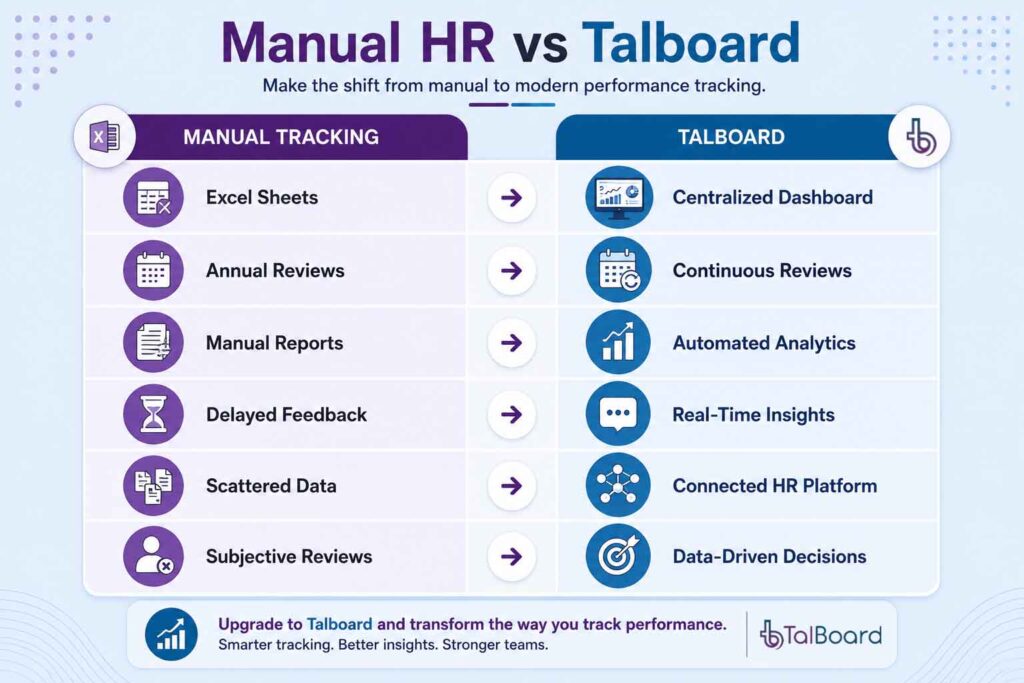
Digital HR platforms simplify performance management by connecting employee data into one centralized system.
Instead of juggling multiple spreadsheets and software, managers gain access to:
- Employee profiles
- Attendance records
- Leave history
- Performance goals
- Review cycles
- Training records
- Reports and analytics
Automation eliminates manual work while improving decision-making.
How Talboard Simplifies Employee Performance Tracking
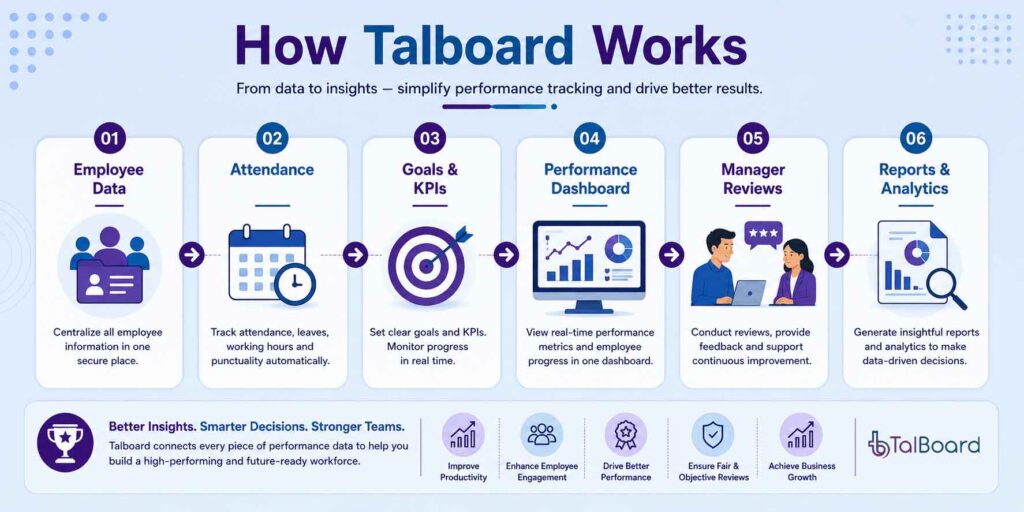
Talboard provides businesses with a connected HR platform designed for modern workforce management.
With Talboard, organizations can:
- Centralize Employee Information
Access all employee records from one dashboard. - Track Goals
Monitor employee objectives and progress in real time. - Measure Attendance
Automatically sync attendance with employee performance insights. - Generate Performance Reports
Visual dashboards help HR teams identify trends and make faster decisions. - Enable Continuous Reviews
Conduct regular performance evaluations instead of relying solely on annual appraisals. - Support Employee Development
Track learning progress, training completion, and career growth opportunities.
Benefits of Digital Performance Tracking
Organizations adopting automated performance management enjoy several benefits:
- Increased employee engagement
- Better productivity
- Improved manager visibility
- Faster performance reviews
- Reduced administrative work
- Fair and objective appraisals
- Better workforce planning
- Higher employee retention
The result is a more motivated workforce aligned with organizational goals.
Future Trends in Employee Performance Management
Performance management continues to evolve with technology.
Some emerging trends include:
AI-Powered Performance Insights
Artificial Intelligence can identify productivity trends and recommend personalized development plans.
Continuous Feedback Culture
Businesses are replacing annual appraisals with ongoing coaching.
Skills-Based Performance Management
Organizations increasingly evaluate employees based on skills rather than job titles alone.
Real-Time Dashboards
Managers can monitor team performance instantly and make proactive decisions.
Integrated HR Systems
Attendance, payroll, learning, and performance data are connected to create a complete employee performance picture.
Conclusion
Employee performance tracking is no longer just an HR process—it is a strategic business function. Organizations that measure performance consistently, provide timely feedback, and support employee development create more engaged teams and achieve stronger business results.
By replacing manual tracking methods with an integrated platform like Talboard, businesses can gain real-time visibility into employee performance, reduce administrative workload, and build a culture of continuous improvement.
Investing in smarter performance tracking today helps organizations develop high-performing teams prepared to meet tomorrow’s challenges.