The Workforce Has Changed—Has Your Business?
For years, Human Resources was viewed primarily as an administrative function responsible for hiring employees, managing payroll, and handling compliance. Today, that perception has completely changed.
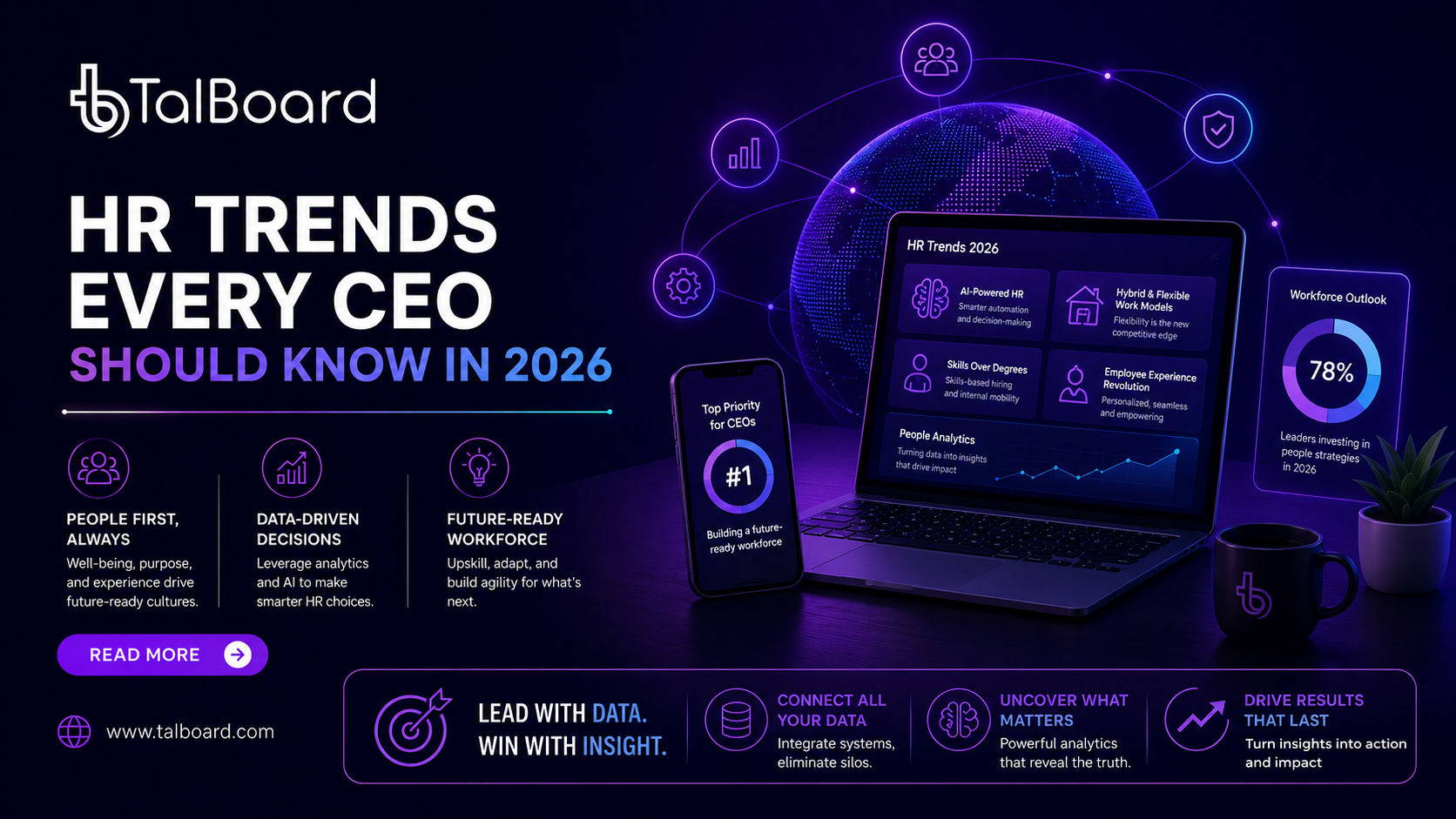
In 2026, HR has become one of the most strategic departments in every successful organization. CEOs are increasingly relying on HR leaders to improve employee experience, build productive teams, reduce turnover, implement AI-powered automation, and create workplaces that attract top talent.
Businesses that fail to modernize their HR processes risk losing skilled employees, slowing growth, and falling behind competitors.
Modern HR is no longer about paperwork.
It’s about creating a workforce that helps businesses scale faster.
Whether you’re running a startup, SME, or enterprise, understanding the latest HR trends can directly impact profitability, productivity, and long-term business success.
Let’s explore the biggest HR trends every CEO should know.
1. AI is Transforming Human Resources
Artificial Intelligence has become one of the biggest drivers of HR transformation.
Instead of replacing HR professionals, AI is helping them become more strategic by automating repetitive administrative work.
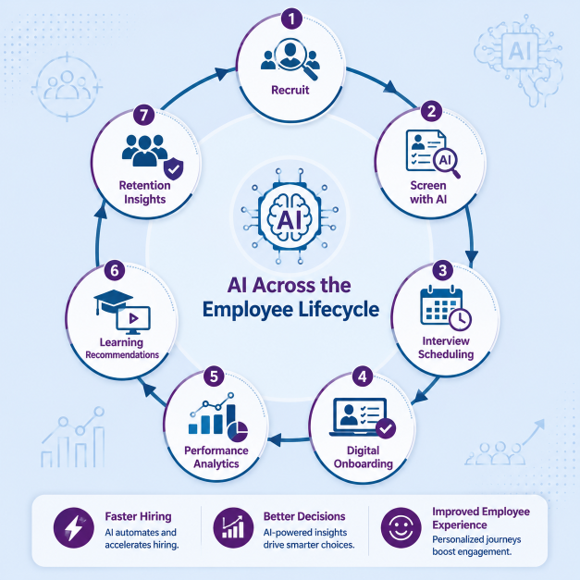
Today’s HR teams use AI for:
- Resume screening
- Candidate matching
- Interview scheduling
- Employee onboarding
- HR chatbots
- Performance insights
- Workforce analytics
- Learning recommendations
This allows HR professionals to spend more time focusing on people rather than paperwork.
CEO Benefits
- Faster hiring
- Lower recruitment costs
- Better candidate experience
- Reduced manual work
- Data-driven decisions
2. Employee Experience Is the New Competitive Advantage
Salary alone is no longer enough to retain employees.
Today’s workforce values:
- Flexibility
- Career growth
- Recognition
- Purpose
- Work-life balance
- Learning opportunities
Organizations are now investing heavily in creating exceptional employee experiences throughout the employee journey.
Companies with better employee experience often experience:
- Higher productivity
- Lower turnover
- Better customer satisfaction
- Stronger employer branding
Employee experience has become a business strategy—not just an HR initiative.
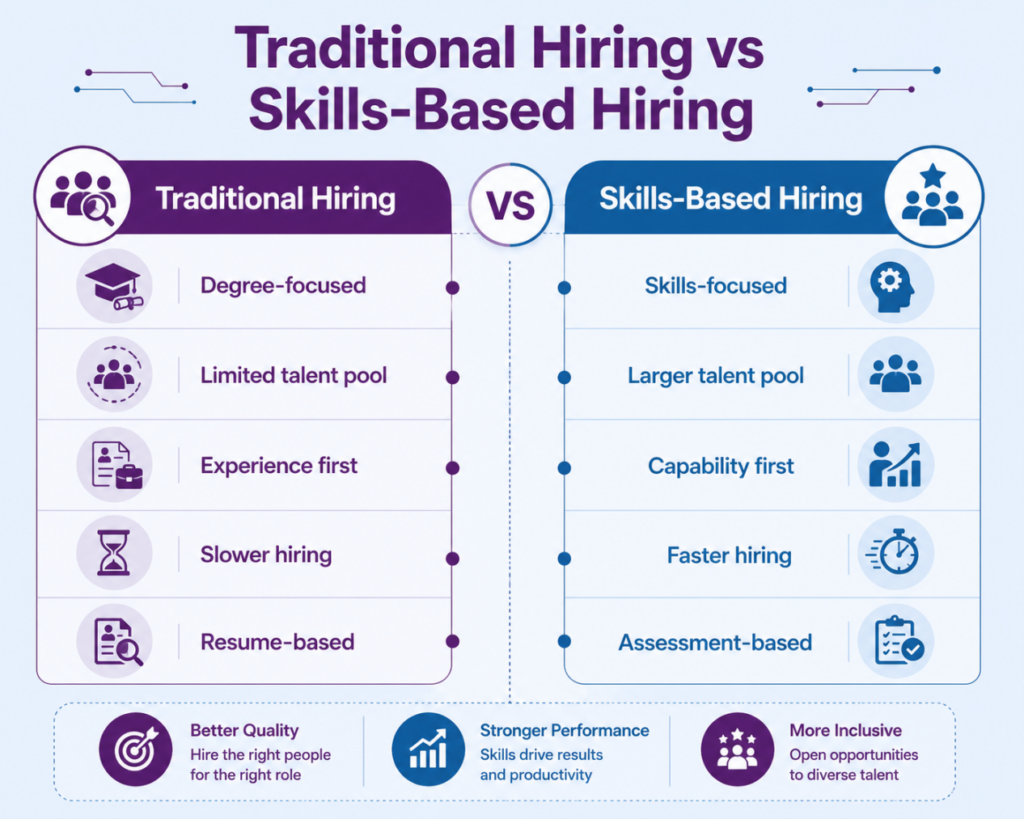
3. Skills Matter More Than Degrees
Companies are shifting toward skills-based hiring.
Instead of focusing only on educational qualifications, employers now prioritize:
- Technical capabilities
- Practical experience
- Certifications
- Communication
- Adaptability
- Problem-solving
This approach helps organizations access larger talent pools while hiring employees who can deliver results faster.
For CEOs, this means building stronger teams without limiting recruitment to traditional qualifications.
4. HR Automation Is Becoming Essential
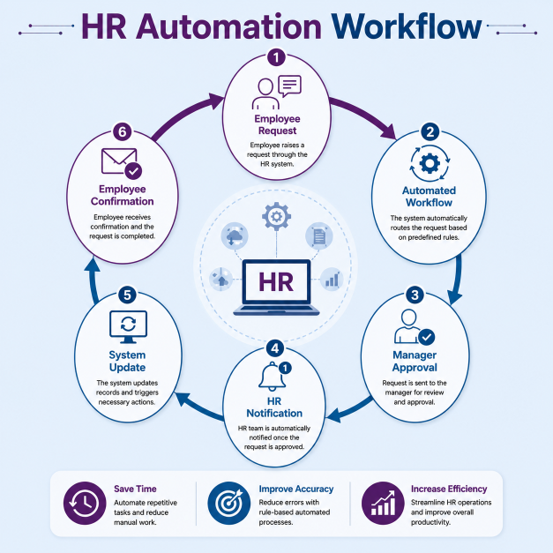
Manual HR processes consume valuable business time.
Forward-thinking organizations are automating:
- Leave management
- Attendance
- Payroll
- Expense approvals
- Employee onboarding
- Document management
- Performance reviews
Automation improves accuracy while reducing administrative workload.
Instead of chasing paperwork, HR teams can focus on talent development and strategic initiatives.
5. Hybrid Work Is Here to Stay
Although many organizations have returned to offices, hybrid work remains the preferred model for millions of employees.
Successful companies now build policies that support:
- Office work
- Remote work
- Flexible schedules
- Digital collaboration
- Cloud-based HR systems
Hybrid workplaces require better communication, digital tools, and stronger leadership.
Businesses that embrace flexibility often attract better talent while improving employee satisfaction.
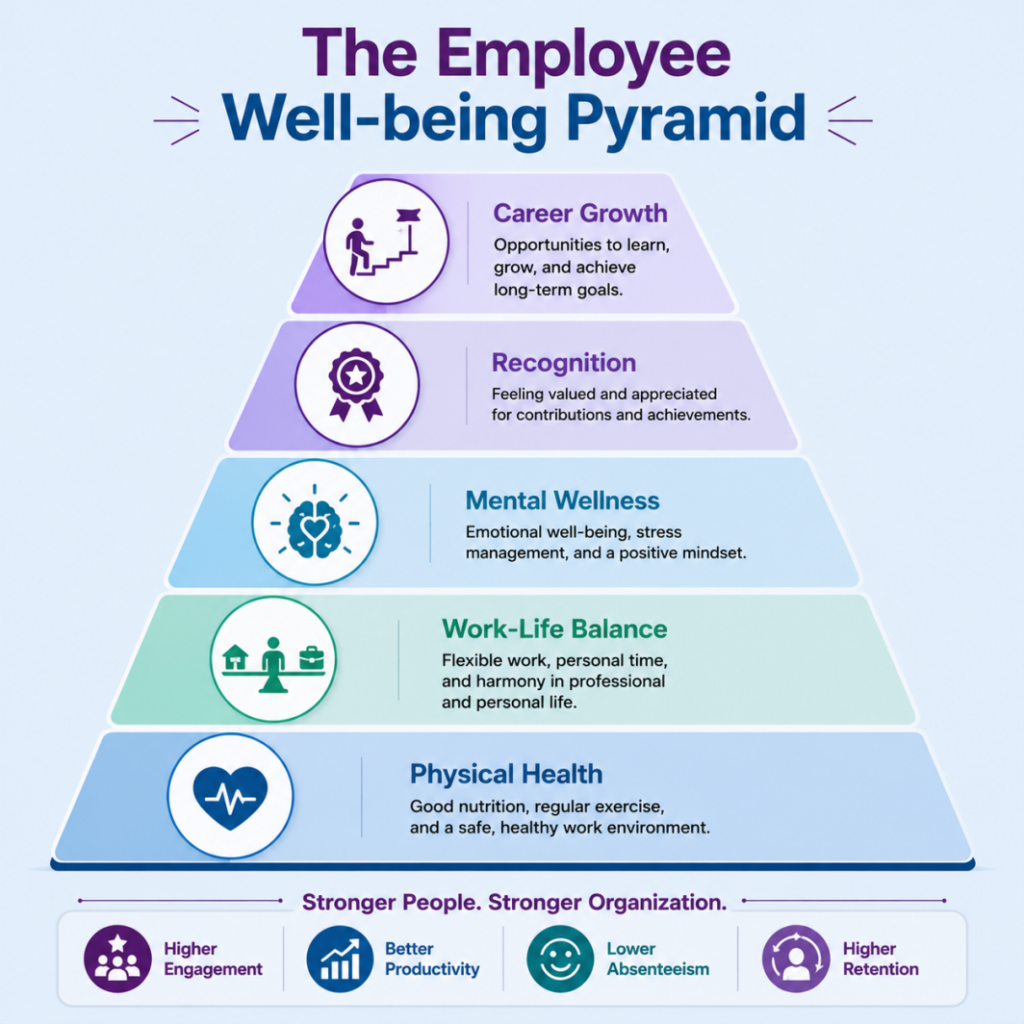
6. Employee Well-being Is a Business Priority
Employee wellness has moved beyond healthcare benefits.
Modern organizations now support:
- Mental health
- Financial wellness
- Physical health
- Flexible leave
- Stress management
- Burnout prevention
Healthy employees perform better, collaborate more effectively, and stay longer.
Investing in employee well-being is no longer optional—it’s a business investment.
7. Data-Driven HR Is Replacing Guesswork
Modern HR platforms provide valuable workforce insights.
CEOs can now track:
- Employee turnover
- Hiring costs
- Productivity
- Attendance trends
- Engagement scores
- Training effectiveness
- Performance metrics
Instead of relying on assumptions, leaders can make informed decisions backed by real-time data.
People analytics has become one of HR’s biggest competitive advantages.
8. Continuous Learning Is Becoming Essential
Technology evolves quickly.
So do skill requirements.
Organizations are investing in continuous learning through:
- Online courses
- Internal training
- AI-powered learning
- Upskilling
- Cross-skilling
- Leadership development
Businesses that invest in employee growth create stronger internal talent pipelines while reducing recruitment costs.
Learning is becoming a continuous process rather than a one-time event.
9. HR Is Becoming More Strategic
Today’s HR leaders actively contribute to business decisions.
They help organizations with:
- Workforce planning
- Succession planning
- Leadership development
- Organizational design
- Culture building
- Digital transformation
HR has evolved from an operational department into a strategic growth partner.
CEOs increasingly involve HR leaders in boardroom discussions because people strategy directly influences business performance.
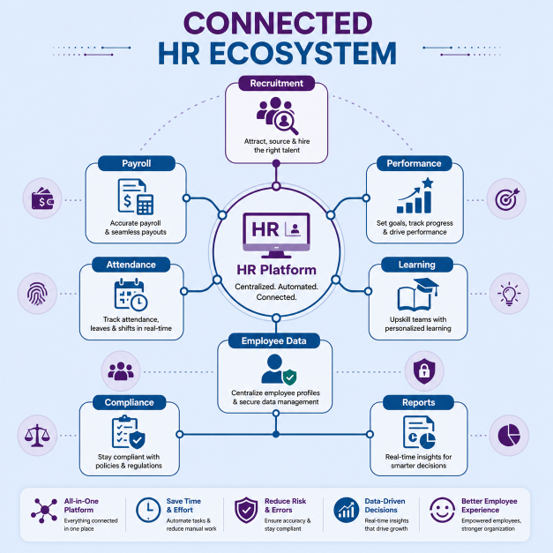
10. Integrated HR Technology Is the Future
Many businesses still rely on disconnected systems for:
- Recruitment
- Payroll
- Attendance
- Performance
- Compliance
- Learning
Modern HR platforms integrate everything into a single ecosystem.
Benefits include:
- Better visibility
- Faster reporting
- Improved employee experience
- Fewer manual errors
- Centralized workforce management
Integrated HR systems help organizations scale more efficiently while improving decision-making.
What CEOs Should Prioritize in 2026
Business leaders should focus on five priorities:
- Modernize HR through automation and AI.
- Invest in employee experience and well-being.
- Build a skills-first hiring strategy.
- Use workforce analytics for smarter decision-making.
- Adopt integrated HR platforms to support business growth.
Organizations that embrace these trends will be better positioned to attract top talent, improve productivity, and stay competitive in an evolving market.
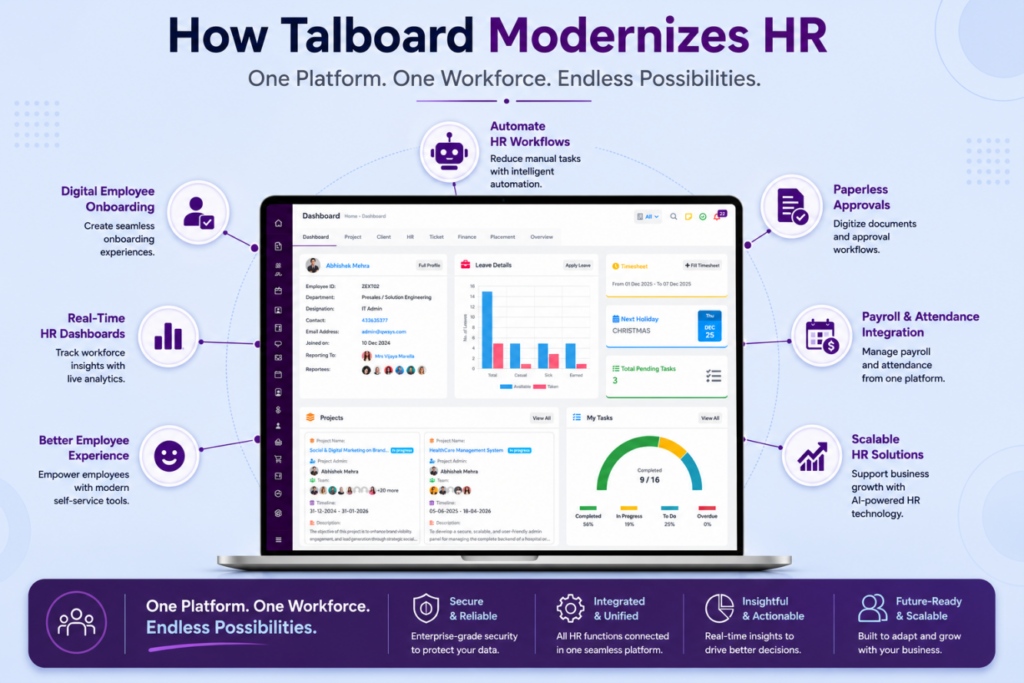
How Talboard Helps Businesses Modernize HR
At Talboard, we help organizations simplify and transform HR through intelligent technology and automation.
Our solutions empower businesses to:
- Automate HR workflows
- Streamline employee onboarding
- Digitize approvals and documentation
- Integrate payroll and attendance systems
- Improve workforce visibility with real-time dashboards
- Enhance employee experience through modern HR platforms
- Support scalable growth with AI-powered solutions
By combining software development expertise with automation and digital transformation, Talboard enables businesses to build future-ready HR operations that save time, reduce costs, and improve employee satisfaction.
Conclusion
The role of HR has evolved dramatically, becoming a strategic driver of organizational success rather than just an administrative function. Trends such as AI-powered recruitment, HR automation, skills-based hiring, employee well-being, hybrid work, continuous learning, and data-driven decision-making are redefining how businesses attract, retain, and develop talent.
For CEOs, staying ahead of these trends isn’t just about improving HR—it’s about strengthening the entire business. Organizations that invest in modern HR technologies and people-first strategies will be better equipped to boost productivity, foster innovation, and scale sustainably in an increasingly competitive market.
Partnering with experts like Talboard can help businesses accelerate this transformation, leveraging AI-driven solutions and integrated HR platforms to create a smarter, more agile workforce. The future of business belongs to organizations that prioritize both technology and people—and the time to embrace that future is now.