In today’s fast-moving business environment, data is supposed to guide decisions, improve efficiency, and accelerate growth. But for many companies, reporting has become the opposite of helpful. Instead of creating clarity, disconnected tools and fragmented dashboards often generate confusion, delays, and operational noise.
Sales teams rely on CRM reports. Finance teams pull numbers from accounting software. HR uses separate workforce systems. Operations depend on spreadsheets and manual tracking. Every department sees different metrics, different formats, and sometimes completely different versions of the truth.
The result is not better visibility. It is uncertainty.
For growing businesses, this confusion becomes a hidden growth barrier.
The Problem With Multiple Reporting Systems
Most organizations today use several software platforms to manage their operations. While each tool may perform well individually, they often fail to communicate properly with one another.
This creates reporting silos.
A sales dashboard may show revenue targets being achieved, while finance reports delayed payments. Operations might report productivity improvements, but HR sees increasing workload and burnout. Leadership teams are then forced to spend more time verifying data instead of acting on it.
When reports conflict, decision-making slows down.
Common challenges businesses face include:
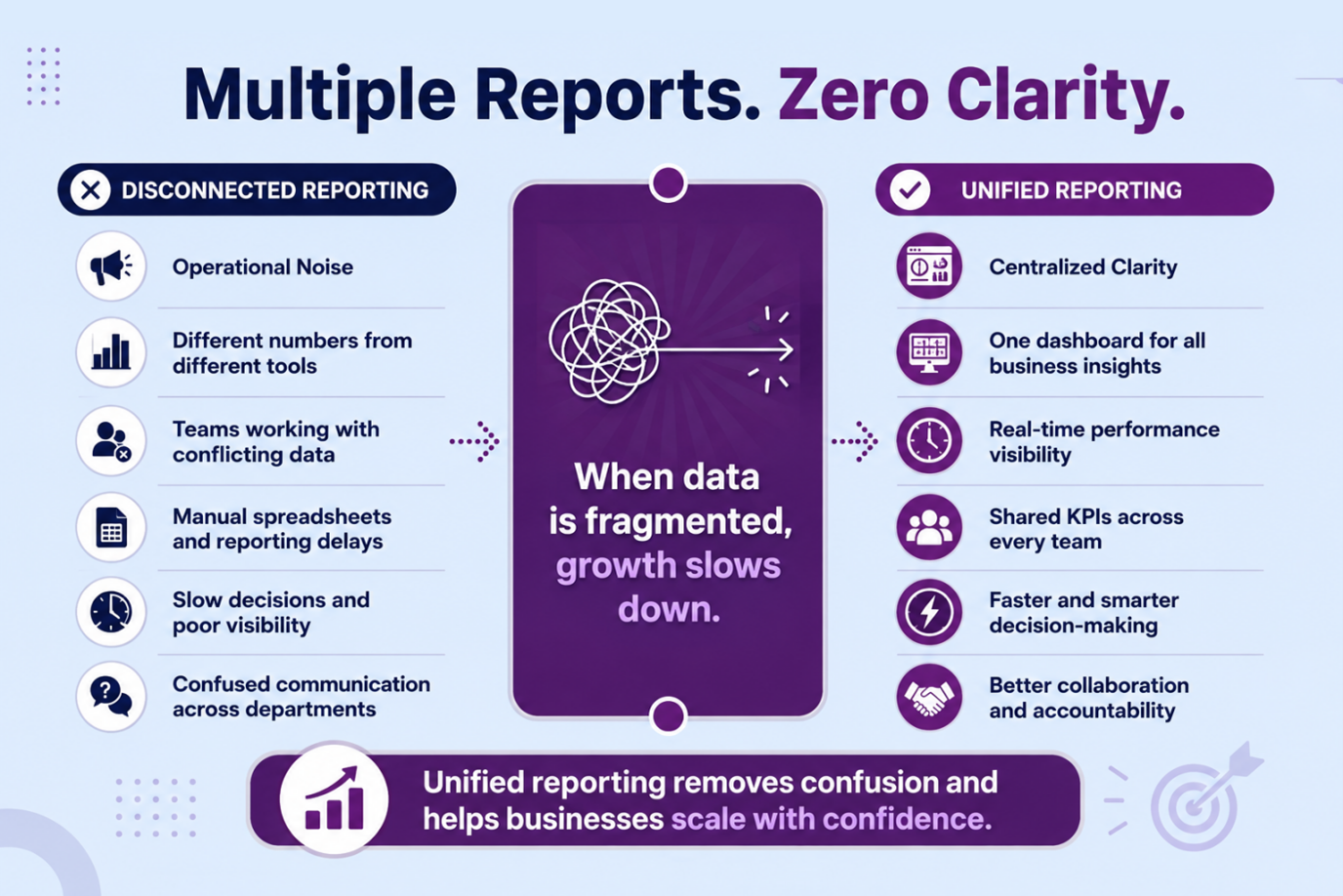
- Duplicate or inconsistent data
- Different KPIs across departments
- Manual spreadsheet consolidation
- Delayed reporting cycles
- Lack of real-time visibility
- Miscommunication between teams
- Increased operational stress
Instead of empowering teams, reporting becomes a daily struggle.
When Confusion Impacts Business Growth
Conflicting reports do more damage than most businesses realize.
1. Slower Decision-Making
When leadership cannot trust the numbers immediately, every decision gets delayed. Teams waste time validating reports instead of solving problems or pursuing opportunities.
In fast-moving industries, even small delays can lead to missed revenue opportunities.
2. Reduced Team Alignment
Different departments begin operating with different assumptions. Sales focuses on one set of goals while finance tracks another. Marketing reports strong lead generation, but operations may not be prepared for increased demand.
Without unified reporting, collaboration weakens.
3. Operational Inefficiency
Manual reporting processes consume valuable time. Employees spend hours exporting spreadsheets, comparing numbers, and correcting inconsistencies.
This repetitive work reduces productivity and increases the risk of human error.
4. Poor Strategic Visibility
Leaders need a complete business view to make confident strategic decisions. Fragmented reports only provide isolated snapshots.
Without centralized visibility, forecasting becomes unreliable and long-term planning suffers.
Why Unified Reporting Changes Everything
Unified reporting brings all critical business data into one centralized system. Instead of switching between tools or managing disconnected spreadsheets, teams access one reliable source of truth.
This approach removes operational noise and creates clarity across the organization.
With unified reporting, businesses can:
- Track real-time performance
- Align teams around shared KPIs
- Reduce reporting inconsistencies
- Improve collaboration
- Make faster decisions
- Increase operational transparency
- Identify growth opportunities earlier
The goal is not simply collecting more data. The goal is making data understandable, actionable, and trustworthy.
From Operational Noise to Operational Clarity
A unified reporting system transforms how businesses operate daily.
Instead of asking:
- “Which report is correct?”
- “Why are these numbers different?”
- “Can someone update the spreadsheet?”
Teams begin asking:
- “What action should we take next?”
- “Where can we improve performance?”
- “How do we scale faster?”
This shift is powerful.
When employees trust the data, communication improves. Departments become aligned. Leadership gains confidence. Decision-making becomes proactive instead of reactive.
The Role of Centralized Platforms Like Talboard
Modern businesses need more than disconnected software tools. They need a centralized operational ecosystem where reporting, collaboration, and visibility work together seamlessly.
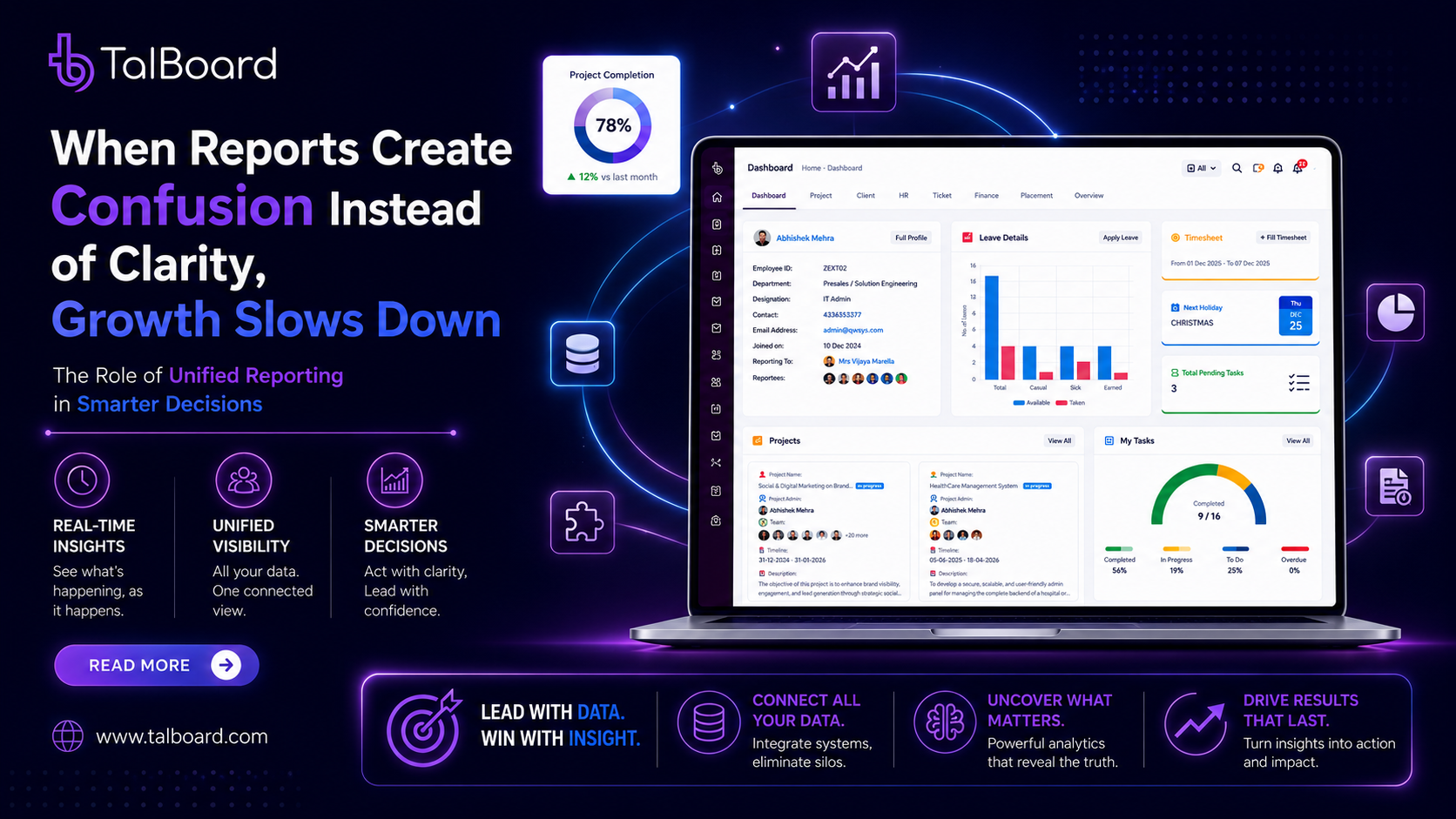
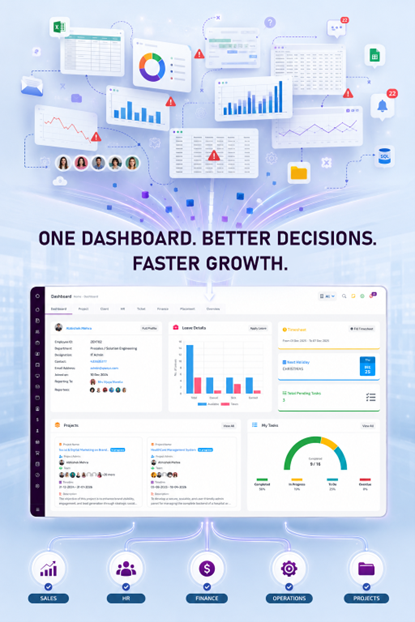
Platforms like Talboard help businesses eliminate fragmented reporting by bringing critical operational data into one unified dashboard.
Instead of managing multiple disconnected systems, teams can:
- Monitor workflows centrally
- Access live business insights
- Reduce reporting confusion
- Improve accountability
- Streamline communication
- Focus on strategic growth
This creates a cleaner, faster, and more scalable operational structure.
Clarity Drives Growth
Growth depends on confident decisions. Confident decisions depend on reliable visibility.
When reports create confusion, businesses slow down. Teams lose alignment, operations become reactive, and leadership struggles to identify the right direction.
But when reporting becomes unified, clear, and centralized, businesses operate with greater speed, efficiency, and confidence.
Because in modern business, clarity is not just helpful.
It is a competitive advantage.