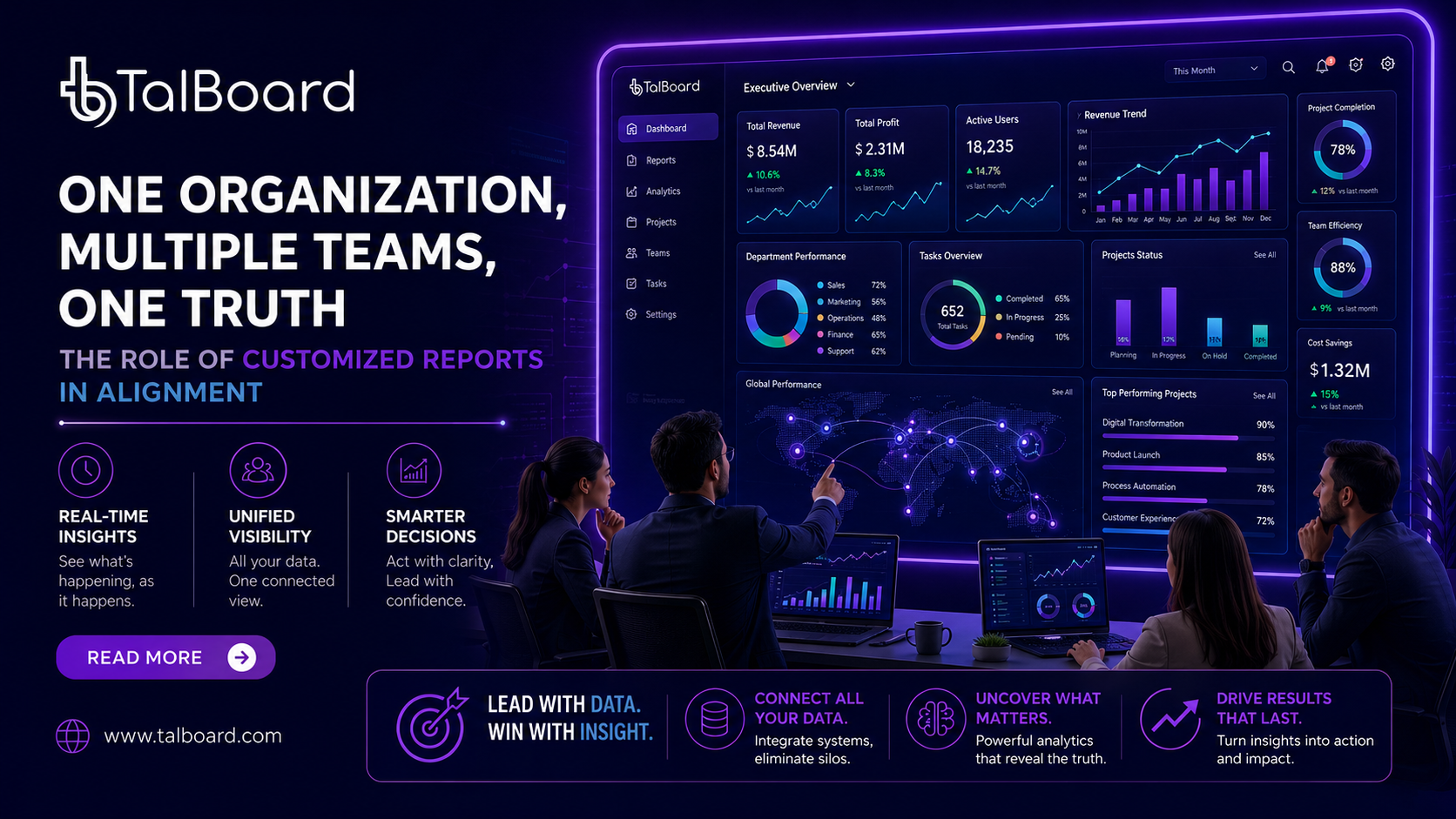
In growing organizations, every team works toward the same business goals — but each department sees the business from a different angle.
Sales focuses on revenue growth. HR monitors employee performance and engagement. Finance tracks profitability and cash flow. Operations concentrate on efficiency and execution. While all teams rely on data, they do not need the same data presented in the same way.
This is where many businesses struggle.
A rigid reporting system may appear organized, but it often creates confusion, slows decision-making, and disconnects departments from the insights that matter most to them. As organizations scale, customized reporting becomes essential for maintaining clarity, collaboration, and alignment across teams.
Modern businesses need one source of truth with multiple team-specific views.
Why One Reporting Format Fails Growing Organizations
Different teams have different responsibilities, priorities, and KPIs.
A report that helps leadership may feel overwhelming for operational teams. Similarly, detailed workflow reports may not help executives who only need strategic insights.
For example:
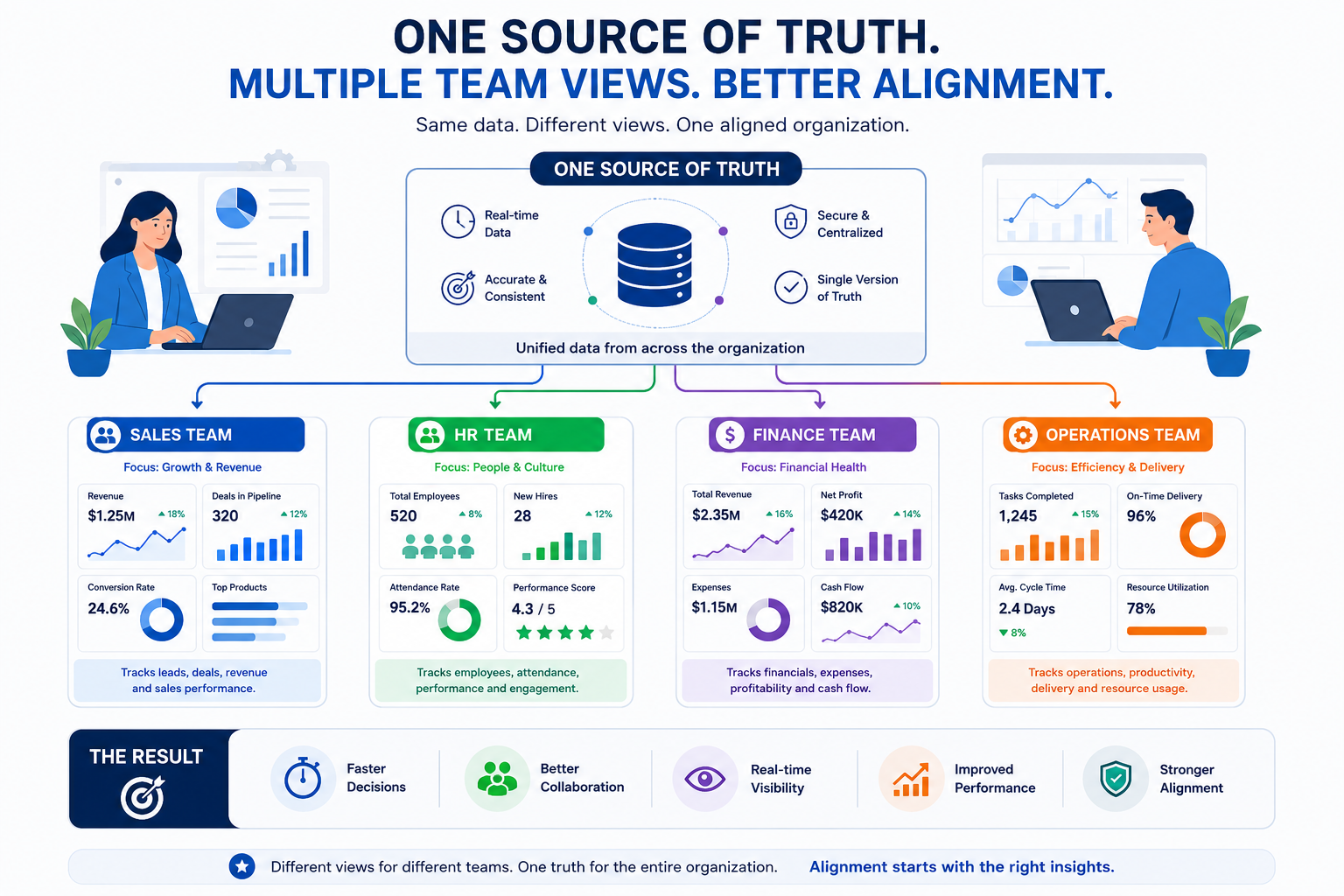
- Sales teams want lead conversion rates, pipeline visibility, and revenue tracking.
- HR teams focus on hiring, attendance, employee engagement, and retention.
- Finance departments monitor expenses, margins, and profitability.
- Operations teams track productivity, resource allocation, and delivery timelines.
When every department is forced into the same reporting structure, important insights get lost inside irrelevant data.
Instead of improving visibility, static reports create reporting fatigue.
The Problem With Static and Generic Reports
Traditional reporting systems often rely on fixed templates, spreadsheets, and manually updated reports. These methods may work temporarily, but they become inefficient as businesses grow.
Some common problems include:
Information Overload
Teams spend unnecessary time searching through reports filled with irrelevant metrics.
Delayed Decision-Making
Manual reporting processes create delays that prevent businesses from acting quickly.
Lack of Role-Based Visibility
Employees and managers struggle to identify insights relevant to their responsibilities.
Misalignment Between Teams
Different departments interpret the same data differently due to disconnected reporting systems.
Reduced Accountability
Without clear ownership and visibility, tracking performance becomes difficult.
Over time, these issues create operational silos, even when teams are technically working toward shared business goals.
One Source of Truth, Multiple Team Views
Customized reporting does not mean creating separate versions of reality for different departments.
The goal is to maintain one centralized and accurate data source while presenting information differently based on team needs.
This approach helps organizations:
- Maintain consistency across departments
- Improve trust in data
- Reduce confusion
- Enhance collaboration
- Support faster decision-making
When every team works from the same real-time data foundation, alignment improves naturally.
How Customized Reports Help Organizations
1. Teams Focus on Relevant Metrics
Customized dashboards allow departments to track the information most relevant to their work.
Instead of reviewing endless spreadsheets, teams can immediately access actionable insights.
This improves:
- Productivity
- Clarity
- Efficiency
- Decision-making speed
Employees spend less time searching for information and more time acting on it.
2. Leadership Gains Better Visibility
Executives need high-level strategic insights, not operational overload.
Customized executive dashboards help leadership:
- Track business performance in real time
- Identify risks early
- Monitor organizational growth
- Compare department performance
- Make faster strategic decisions
This creates proactive leadership instead of reactive management.
3. Cross-Team Collaboration Improves
When reporting systems are connected, departments collaborate more effectively.
For example:
- HR hiring trends can support operational expansion planning
- Sales performance data can help finance forecast revenue
- Customer service insights can guide operational improvements
Customized reporting helps teams stay connected while still focusing on department-specific priorities.
4. Real-Time Reporting Improves Agility
Growing organizations cannot rely on outdated reports.
Real-time customized dashboards help businesses:
- Respond quickly to operational challenges
- Monitor live performance
- Reduce manual reporting dependency
- Improve adaptability
In competitive industries, faster access to accurate data becomes a major advantage.
Why Reporting Flexibility Matters During Growth
As organizations scale, complexity increases.
More departments, employees, systems, and processes generate larger volumes of data. Without adaptable reporting systems, businesses lose visibility and alignment.
Customized reporting supports growth by:
- Standardizing performance tracking
- Reducing reporting confusion
- Improving accountability
- Supporting scalable operations
- Enhancing organizational transparency
Businesses that rely on rigid reporting structures often struggle to maintain alignment as they expand.
What Modern Businesses Need From Reporting Systems
Today’s organizations need reporting systems that are:
- Real-time
- Centralized
- Flexible
- Role-based
- Interactive
- Easy to understand
Modern reporting should simplify decision-making — not complicate it.
The most effective systems combine organization-wide visibility with department-specific customization.
How Talboard Supports Smarter Reporting
Talboard helps businesses simplify operations through centralized and customizable reporting systems.
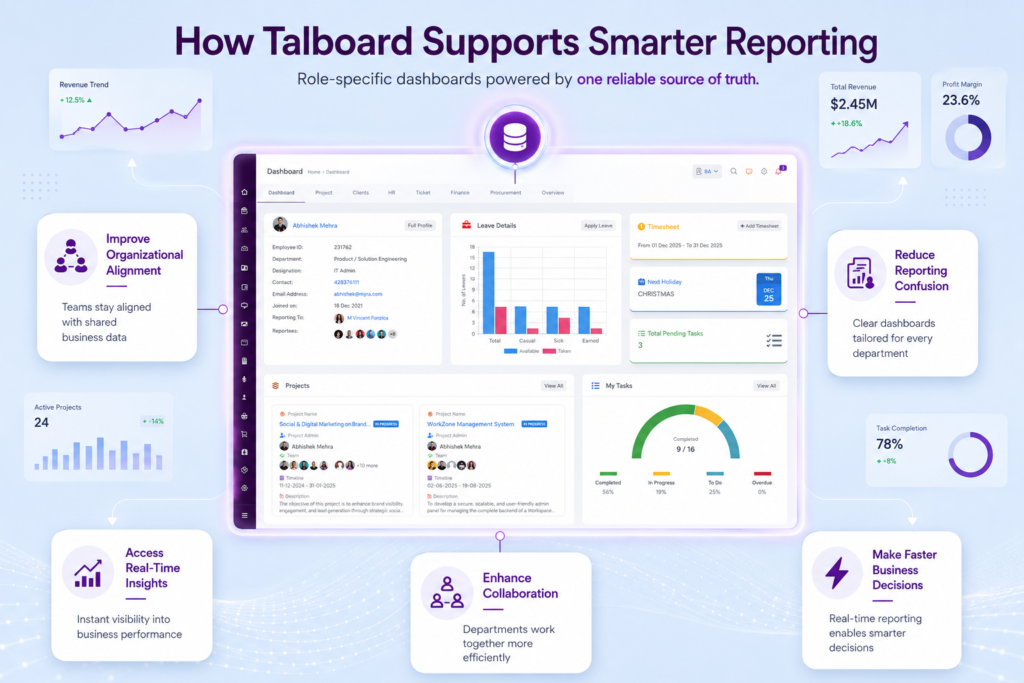
Instead of forcing all departments into one rigid reporting structure, Talboard enables organizations to create role-specific dashboards while maintaining one reliable source of truth.
With customized reporting, businesses can:
- Improve organizational alignment
- Reduce reporting confusion
- Access real-time insights
- Enhance collaboration
- Make faster business decisions
This allows every department to focus on what matters most without losing connection to the bigger organizational picture.
Conclusion
Different teams see the business differently — and that is exactly why reporting should be flexible.
A one-size-fits-all reporting system may seem efficient initially, but it eventually creates confusion, delays, and misalignment as organizations grow.
Customized reporting solves this challenge by giving each department relevant insights while keeping the entire organization connected through one unified data source.
When businesses combine team-specific visibility with shared truth, collaboration improves, decisions become faster, and organizations stay aligned at every stage of growth.